1. 1 Test
  2. 2 Read results
  3. 3 Treat

Well water problems and what fixes them

Find your problem by its signs, then check what treatment works, what doesn't, and whether it belongs where water enters the house (whole house) or at one tap.

Start with what you see Have a lab report? Use the selector

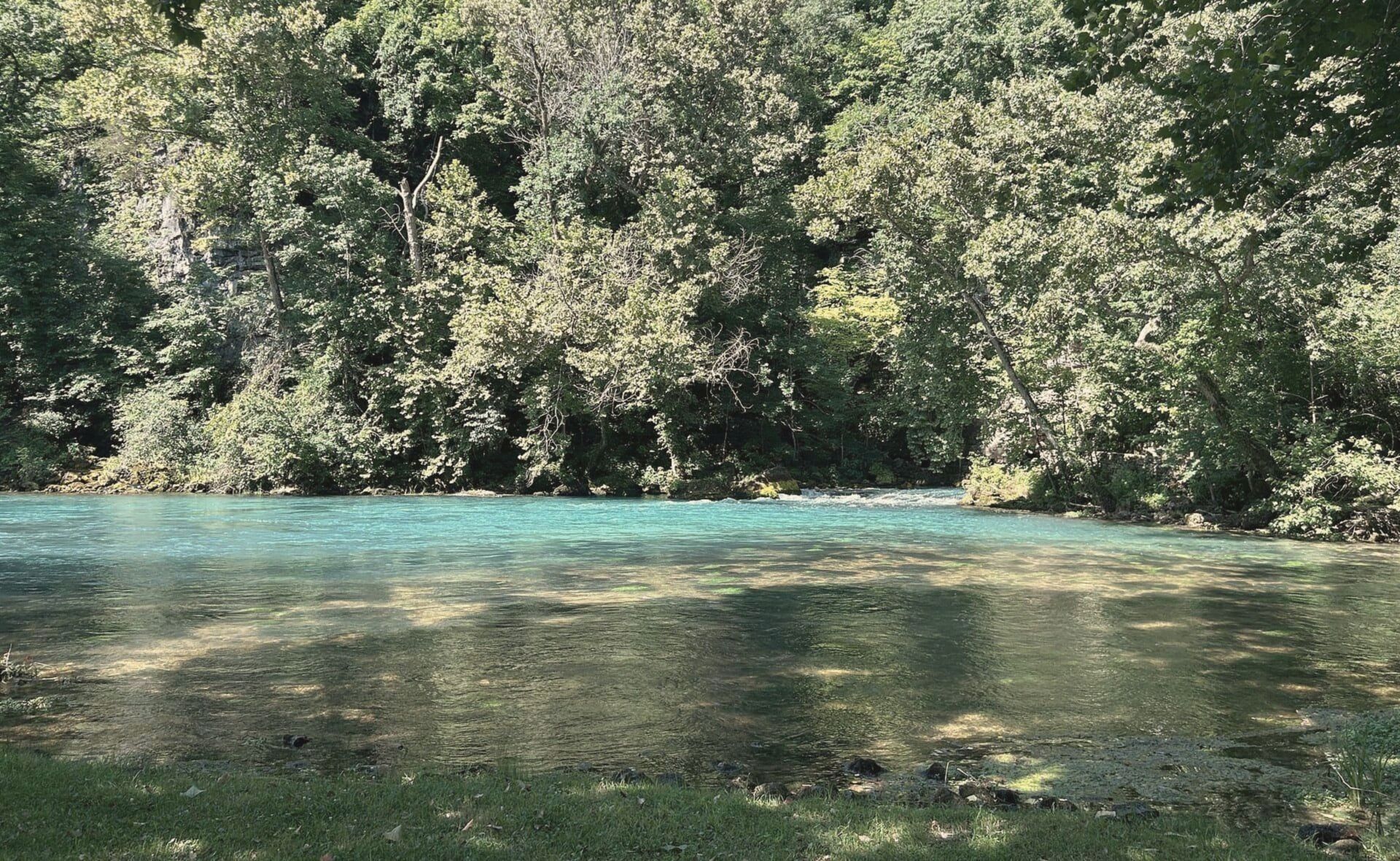
A clear turquoise spring pool below a wooded hillside in summer

Big Spring, Missouri: groundwater at the surface

Photo: Gyrfalk · CC BY-SA 4.0 · modified

Start with what you see

Tap a sign to jump to its causes and fixes.

Two rules before you buy anything. First, test with a certified lab: many problems have no sign at all. Second, "no single treatment unit can remove all contaminants".1 Match the treatment to your test results.

No sign at all? Only a lab test finds these.

Benchmarks at a glance

EPA primary and secondary drinking water standards.2, 3 "Aesthetic" means a secondary standard for taste, color, smell or staining, not a health limit.

ProblemTypical signsEPA benchmarkWhere to treat
IronOrange-brown stains, metallic taste, water turns rusty on standing0.3 mg/L (aesthetic)Whole house
Iron bacteriaOrange slime in the toilet tank, swampy smellNoneWell + whole house
ManganeseBlack stains, bitter taste0.05 mg/L (aesthetic)Whole house
Hydrogen sulfideRotten-egg smellOdor onlyWhole house
HardnessWhite scale, soap scumNoneWhole house
Low pHBlue-green stains, pinhole leakspH 6.5–8.5 (aesthetic)Whole house
SedimentCloudy or gritty waterNoneWhole house, first stage
TanninsTea-colored waterColor 15 units (aesthetic)Whole house
Coliform / E. coliUsually noneShould be absentDisinfection, whole house
NitrateNone10 mg/L as NUsually one tap
ArsenicNone0.010 mg/LOne tap or whole house
RadonNoneNo final federal limitWhole house
PFASNone4 ppt for PFOA, PFOS (2024 rule)Usually one tap
Lead / copperCopper: blue-green stainsLead 0.015 mg/L action levelFix pH + one tap

Stains, smell and scale

Nuisance problems you can see or smell. They're treated where water enters the house.

Iron

Signs: rust-colored water, reddish-orange stains, a metallic taste. Dissolved ("clear-water") iron comes out of the tap clear and turns orange-brown when it stands.4

What works depends on how much iron you have:4

  • Water softener: dissolved iron below 5 mg/L, with pH above 6.7.
  • Greensand oxidizing filter: iron plus manganese of about 3–10 mg/L.
  • Oxidation + filtration (chlorine, permanganate or peroxide, followed by a filter): higher levels, above 10 mg/L. Aeration with a filter may also work (no level given).

Sources give different upper limits: UGA Extension puts oxidizing filters at up to 15 mg/L and pressure aeration with filtration at up to 25 mg/L.5 Check the manufacturer's stated maximum for any system you consider.

What doesn't: a softener can't handle iron that is already oxidized (red water); it fouls the resin. Polyphosphate only hides low iron levels and doesn't remove it.4

Iron bacteria

Signs: orange or slimy deposits in the toilet tank, orange water, a swampy or musty smell.6 They are a nuisance rather than a health risk, but they come back.

What works: shock chlorination of the well, cleaning of the well by a professional, or continuous chlorination with a filter. If you need to shock the well more often than every 6 months, look at other options. What doesn't: filters "will not control populations within the well".6

Manganese

Signs: black-brown water, black stains, a bitter metallic taste.4 Secondary benchmark 0.05 mg/L; EPA's non-enforceable health advisory is 0.3 mg/L.3, 4

What works: a softener for small amounts, greensand, or oxidation + filtration. Birm media needs a pH of at least 7.5 for manganese and gives variable results. What doesn't: polyphosphate.4

Hydrogen sulfide (rotten-egg smell)

Signs: a rotten-egg smell, noticeable at very low levels. If you only smell it in hot water, the cause is often the water heater's magnesium anode rod; replacing it with an aluminum anode is the simple fix.7

What works in the whole house:7

  • Activated carbon at low levels (Penn State: below about 1 mg/L; UGA warns carbon may fail above 0.3 ppm8).
  • Greensand up to about 2–3 mg/L; aeration up to about 2 mg/L.
  • Chlorination + filtration at any level, with about 20 minutes of contact time.

What doesn't: Birm media. Shock chlorination helps only for a while; the smell "will return quickly".7

Hardness

Signs: white scale on fixtures and in kettles, soap scum, a shorter water-heater life. Hardness below 7 grains per gallon rarely causes major scaling.9 There's no health limit.

What works: a cation-exchange water softener. Keep in mind: a softener is not a purifier. It "will not necessarily remove any of the more serious" contaminants and doesn't remove germs. It adds sodium (about 7.5 mg per quart for each grain per gallon removed) and uses about 50 gallons per regeneration, which goes to your septic system.9

Low pH (acidic water)

Signs: blue-green stains from copper pipes, reddish stains from galvanized pipes, pinhole leaks, a metallic taste. EPA's secondary range is pH 6.5–8.5.3, 10

Low pH itself isn't a health problem, but it dissolves metals like copper and lead from plumbing. What works: a calcite or magnesia neutralizing filter, or a soda-ash feed pump for high-flow systems. A neutralizer adds hardness, so it goes before a softener.5, 10

Sediment and cloudy water

What works: a cartridge filter for light loads; a backwashing sand or multimedia filter for heavy loads.5, 11 It goes ahead of UV and reverse osmosis.1, 25 Keep in mind: it doesn't remove dissolved contaminants, and bacteria can grow in exhausted cartridges. UGA notes that turbidity above 5 NTU can point to bacterial contamination, so test for bacteria too.5

Tannins (tea-colored water)

Activated carbon "can also remove tannins".8 Special anion "tannin resins" are common in the industry, but we found no extension or agency source that evaluates them, so ask for the manufacturer's data. Color also makes UV disinfection less effective.

No sign at all: only a lab finds these

No color, taste or smell. These are the health questions, so they get tested, not guessed.

Coliform bacteria and E. coli

There's usually no sign. That's why the CDC and EPA advise a test every year.12, 13 If your test is positive, contact your health department.

What works: find and fix the source (for example a damaged well cap), then shock-chlorinate. If bacteria keep coming back: continuous chlorination, a UV system certified to NSF/ANSI 55 Class A, or distillation.5, 15

What doesn't: softeners and carbon filters don't remove bacteria.24, 25 Shock chlorination is "NOT a recommended method for treating recurring bacteria problems".14 Class B UV units are "not intended for the disinfection of microbiologically unsafe water".15

Nitrate

No taste, no smell. EPA's limit is 10 mg/L as nitrogen.2 What works: reverse osmosis or distillation at the kitchen tap, or anion exchange.5 What doesn't: carbon filters.25 Boiling makes nitrate worse because it concentrates it. Minnesota's health department advises against using treated water for infant formula for babies under 6 months if the well has high nitrate, even with treatment as a backup.16

Arsenic

No color, taste or smell. EPA's limit is 0.010 mg/L.2 About 2.1 million people in the US use wells with predicted arsenic above that level.17

What works depends on the form:5, 18

  • Iron-oxide adsorptive media removes both arsenic III and arsenic V. UGA Extension prefers it for the whole house.
  • Reverse osmosis, activated alumina, anion exchange work on arsenic V. Arsenic III must first be oxidized (for example with chlorine), or these systems fall short.

Both whole-house and single-tap treatment are accepted. Ask your lab for arsenic speciation before you choose.

Radon

Radon in water mostly matters because it escapes into the air when you shower or wash, so it needs whole-house treatment. Aeration is "the most effective"; whole-house carbon also works, while small faucet filters are "inadequate".19 EPA proposed a radon-in-water rule in 1999 for community water systems; it would not apply to private wells, "because EPA does not regulate them".26

PFAS ("forever chemicals")

EPA's 2024 rule set 4 parts per trillion for PFOA and PFOS. In May 2026 EPA proposed keeping those two limits and dropping the limits for other PFAS; the proposal isn't final.20 USGS found PFAS at similar levels in private wells and public supplies.21

What works: activated carbon, ion exchange or reverse osmosis, usually at the kitchen tap. EPA advises choosing a filter certified to NSF/ANSI 53 or 58 for PFOA and PFOS.22 Note that these certifications test reduction to a combined 20 ppt, which doesn't prove reduction below EPA's 4 ppt.23

Lead and copper

These usually come from your plumbing, not the aquifer, often because the water is acidic. First fix corrosive water (neutralizer or soda ash) or replace metal plumbing; then, at the tap, use reverse osmosis, distillation or a carbon filter certified for lead.1, 5, 11 Some treatments (anion exchange, aeration, softening) can make water more corrosive, which matters with lead or copper pipes.1

When a whole-house system is the wrong tool

Treat where the problem matters: in the glass, in the air, or on every fixture.

  • One tap

    What matters when you drink it

    Nitrate, uranium, PFAS, chloride and often arsenic can be treated at the kitchen tap. A point-of-use reverse osmosis unit costs about $300–1,500; a whole-house one $5,000–12,000.1

  • Disinfection

    Bacteria

    Bacteria need disinfection (UV or chlorination), not just filtration.5, 15, 24

  • Whole house

    What escapes into the air

    Radon escapes into the air from showers and taps, so it needs whole-house treatment, as do volatile organic compounds.19, 25

  • Whole house

    What shows on fixtures

    Iron, manganese, hardness and sulfur affect the whole house (stains, smell, scale), so they're treated where water enters.4, 7, 25

Sources (26) · checked Oct 31, 2026
  1. Minnesota Dept. of Health: Minnesota Dept. of Health, Home Water Treatment fact sheet (rev. 2024-03-29; checked 2026-10-31)
  2. EPA: EPA, National Primary Drinking Water Regulations (2026-08-31; checked 2026-10-31)
  3. EPA: EPA, Secondary Drinking Water Standards (2026-05-26; checked 2026-10-31)
  4. Penn State Extension: Penn State Ext., Iron and Manganese in Private Water Systems (2025-05-29; checked 2026-10-31)
  5. UGA Extension: UGA Ext. Bulletin 939, Water Quality and Common Treatments for Private Drinking Water Systems (2026-07-01; checked 2026-10-31)
  6. Penn State Extension: Penn State Ext., Iron and Sulfur Bacteria (2024-09-16; checked 2026-10-31)
  7. Penn State Extension: Penn State Ext., Hydrogen Sulfide in Water Wells (2024-12-10; checked 2026-10-31)
  8. UGA Extension: UGA Ext. C858-15, Hydrogen Sulfide and Sulfate (reviewed May 2026; checked 2026-10-31)
  9. Penn State Extension: Penn State Ext., Water Softening (2025-09-08; checked 2026-10-31)
  10. Connecticut DPH: Connecticut DPH, Publication 18: pH-Acidity of Private Wells (May 2009; checked 2026-10-31)
  11. Penn State Extension: Penn State Ext., Common Drinking Water Problems and Solutions (2025-05-29; checked 2026-10-31)
  12. CDC: CDC, Guidelines for Testing Well Water (2024-07-01; checked 2026-10-31)
  13. EPA: EPA, Protect Your Home's Water (2026-02-26; checked 2026-10-31)
  14. UGA Extension: UGA Ext. C858-4, Shock Chlorination (2026-04-17; checked 2026-10-31)
  15. Ohio Dept. of Health: Ohio Dept. of Health, UV Light for Continuous Disinfection (rev. July 2011; checked 2026-10-31)
  16. Minnesota Dept. of Health: Minnesota DOH, Nitrate in drinking water (2026-06-05; checked 2026-10-31)
  17. USGS: USGS news release, arsenic (Ayotte et al. 2017) (2017 (read via search summary); checked 2026-10-31)
  18. Maryland MDE: Maryland Dept. of the Environment, Arsenic Water Treatment for Individual Wells (hosted by UMD Ext.) (Feb 2008; checked 2026-10-31)
  19. Wisconsin DNR: Wisconsin DNR, Radon in private well water (undated; checked 2026-10-31)
  20. EPA: EPA, PFAS NPDWR page (2026-05-18; checked 2026-10-31)
  21. USGS: USGS news release, PFAS in tap water (Smalling et al. 2023) (2023-07 (read via search summary); checked 2026-10-31)
  22. EPA: EPA, Identifying Drinking Water Filters Certified to Reduce PFAS (2025-11-18; checked 2026-10-31)
  23. Penn State Extension: Penn State Ext., Home Water Treatment for PFAS (2024-06-07; checked 2026-10-31)
  24. CDC: CDC, About Home Water Treatment Systems (2024-04-10; checked 2026-10-31)
  25. Virginia Cooperative Extension: Virginia Tech/VCE 442-670, Household Water Treatment (2024-10-22; checked 2026-10-31)
  26. EPA: EPA archive, Proposed Radon in Drinking Water Rule (1999 proposal; page updated 2012-03-06, seen 2026-10-31; checked 2026-10-31)